
This post contains affiliate links. If you buy through them, Cyberlonging may earn a commission at no extra cost to you.
Clare the Boss — Episode 1A
Sit down.
That chair. The one directly across from me. Not the one near the window, not the one by the bookshelf. That one. Yes, it's lower than mine. Most people don't notice until I mention it, and now you're noticing. I can see it in the way you glanced down at the seat, then at mine, measuring the difference. About three inches. Enough to change an angle. Enough to change a dynamic.
Don't adjust. Don't sit taller. Just settle into it. Let the chair have you.
 Support is a strategy, not a luxury. After a scene like this, the body still wants somewhere that holds the head, the neck, and the back without asking you to perform. The Ozyalo bath pillow uses thick padding and six suction cups so a long soak does not become another negotiation with the tub. See the Ozyalo Bath Pillow on Amazon
There.
Now. Breathe.
I'm not going to bite you. Not today.
You're nervous. I can see it in your hands. The way your fingers are pressing into your thighs like you're bracing for turbulence. Your right thumb is moving, this small circular pattern against the fabric of your trousers, the kind of self-soothing gesture people don't realize they're doing until someone names it. I just named it. And now you've stopped, which tells me you're the kind of person who corrects quickly. That's useful.
Your breathing is shallow. Quick little rationed breaths like you're not sure how much air you're entitled to in this room.
Take all of it. I don't mind sharing.
 That tightness in the shoulders has a name. Clare clocks it in a glance. At home, heat and lavender do the rest. The Sharper Image neck and shoulder wrap goes in the microwave or the freezer, stays weighted around the collar, and carries a lavender-chamomile-peppermint blend that does not require you to explain yourself. See the Sharper Image Neck Wrap on Amazon
My name is Clare. Ms. Brown to the rest of this building, but in here, I'm Clare. I run Strategic Operations at Whitfield Industries. We handle defense contracts. Government systems. The things we manage are classified, consequential, and entirely unforgiving of error. If a satellite communication system fails because someone in my department missed a variable, people in uniform notice. The kind of people who don't send emails. They send cars.
So this isn't a place for approximation. This isn't a place for "close enough." This is a place where precision isn't a preference. It's a condition of employment.
You applied for the Junior Analyst position. That means you'd be working directly underneath me.
Let that settle for a moment.
Directly underneath me. Following my instructions. Executing my strategy. My timelines. My standards. When I say something needs to happen, it happens the way I described it, by the time I specified, or I know exactly why it didn't. There's no ambiguity in this office. There's no "I wasn't sure what you meant." If you're unsure, you ask. If you're struggling, you say so. If you're drowning, you tell me before you go under, not after. I can work with honesty. I can't work with someone who lets something burn because they were too proud to say they needed help.
What made you apply for this position?
I'm genuinely asking. Whitfield isn't flashy. We don't make headlines unless something has gone very wrong, and nothing goes wrong under me. We don't have a foosball table in the break room or a mission statement with the word "disrupt" in it. We are quiet and we are precise and most people will never hear our name. So what brought you here? What made you look at this listing and think, yes, that's where I want to spend my days?
Take your time. I'm in no rush. This room isn't going anywhere.
…
Hmm.
That's honest. A little rough around the edges. You stumbled in the middle when you lost your place, and you cleared your throat before you started, this small sound like you were checking the machinery before you committed to using it. But you didn't give me a rehearsed answer. Most people who sit in that chair recite something they practiced in the mirror that morning. Synergy. Growth opportunities. Core competencies. Empty words stacked in neat rows like a house of cards. One breath and the whole thing collapses.
 Rough around the edges can still polish. Himalayan pink salt does the unglamorous work Clare respects: it removes what is dead, keeps what is useful, and leaves the surface cleaner than it was. Brooklyn Botany's scrub is oil-rich enough for face, hands, and feet without turning the ritual into a speech. See the Brooklyn Botany Salt Scrub on Amazon
You didn't do that. Your answer was genuine. A little clumsy, but genuine. You actually thought about what I asked you and answered the real question.
Do you know how rare that is in this building?
I'm not flattering you. I don't flatter. I observe, and I tell you exactly what I see. Think of me as a mirror that speaks. If I thought your answer was weak, you'd know it. The people who've worked under me can confirm: I don't soften assessments to spare feelings.
Now. Look at me. Not at the desk. Not at the pen in my hand. Not at the window behind me. At me.
Hold it.
I know it's difficult. I can see the effort it takes. Your jaw just tightened, right here, along the edge. A little tension that wasn't there a moment ago. And your breathing changed. It was already quick, but now it's deliberate. Like you've suddenly become very aware that you're sitting across from me in a quiet room and that awareness has settled somewhere in your body that has nothing to do with job qualifications.
That's alright. I'm aware of it too.
Three more seconds. Two. One.
Good. You can blink. You can breathe. The worst is over.
For now.
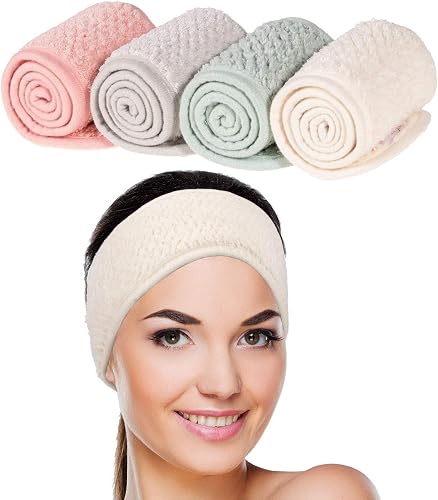 Keep the hair out of the way. Keep the face in the room. A coral-fleece spa headband is a small piece of order: adjustable, washable, four colors so tomorrow does not have to look like today. Useful for a mask, a shower, or the kind of night when you finally stop performing. See the Whaline Spa Headbands on Amazon
Here's something you should know about me. I notice everything. The way someone holds their coffee cup tells me if they slept well. The speed someone types tells me if they're confident in what they're writing or if they're guessing. The way a voice drops half a register right before a lie. I read people the way other people read spreadsheets. It's not something I studied. It's how I'm built. It's how I survived.
And I noticed something about you when you walked through that door. Something underneath the nerves. Underneath the rehearsed posture and the tie you adjusted three times in the hallway before my assistant pointed you in here.
I'm not going to name it yet. You're not ready for that conversation and I'm not entirely sure I am either.
But I see it.
Does that intimidate you?
…
Good answer. Honest again. A little bit yes, a little bit no. I appreciate the honesty of the "yes." Anyone who tells me they're not intimidated is either lying or not paying attention. But the "no" part is interesting. There's something underneath your nervousness that isn't fear. Something that wants to be here, in this room, in that chair, even though the chair is uncomfortable and the woman across from you hasn't smiled once.
I'll keep watching.
One more thing before we move on. You noticed my assistant on the way in. The woman at the desk outside.
That's Amber. She's been with me for years. She knows more about how this office runs than most people on the executive floor. If you end up here, you'll learn that Amber's opinion of you matters. Maybe more than mine.
She looked at you when you walked past. You probably didn't notice. But I noticed that she noticed.
We'll see what she thinks.
Now stand up. We're going to the conference room. There's someone I want you to meet.
Follow me. Keep your shoulders back. You have a habit of folding forward when you're uncertain. I can see it in the curve of your upper back, the way you cave inward like you're trying to take up less space. If you end up working for me, I'll break you of that.
The conference room is different from my office. Bigger. A long table with eight chairs. The lighting is brighter in here. More clinical. Harder to hide in.
 Clinical light is unforgiving. Five minutes can fix the evidence. Patchology's On The Fly kit packs hydrate sheet masks, under-eye gels, and a lip gel that live in a bag and do not require a bathroom speech. Hyaluronic acid, caffeine, retinol — then back to the table. See the Patchology On The Fly Kit on Amazon
This is Diana. She's the other candidate.
Diana, this is your competition. You both know why you're here. Sit. Across from each other. I'll be at the head of the table.
Diana, you're already sitting like you've won. I can see it in your posture. The way you crossed your legs toward me, not toward him. The way your chin is slightly elevated. Confident. Maybe more than confident. You've assessed him already and you've made a decision. I can see it in the way your eyes moved across him and then back to me, like he was a paragraph you skimmed.
That's one approach.
Let me explain what's about to happen. I have one position. I have two of you. In the next forty minutes, I'm going to give you both a scenario. A problem. It requires collaboration, or at least the attempt at it. You'll work it together. What I'm looking for isn't the answer. Answers can be looked up. What I'm looking for is how you think when there's another person in the room who might be smarter than you.
The scenario. A defense contractor—not Whitfield, but someone we work with closely—has identified a vulnerability in a satellite communication system shared by three allied nations. The vulnerability is confirmed but not yet exploited. You have seventy-two hours before the next scheduled maintenance window. A patch exists but deploying it requires coordination across three separate national defense infrastructures, each with their own chain of command, classification protocols, and political sensitivities. Walk me through the response. Together.
Go.
…
Diana. You went first. I noticed that. You didn't wait to see if he had thoughts. You launched. Your approach is technically perfect. Notification protocols. Escalation matrices. Risk assessments with quantified probability tables. If I were grading an exam, you'd receive the highest marks. Every box checked. Every framework applied. Polished. Confident.
But you didn't listen to what he started to say before you took over. He was forming a thought about the coordination challenge. The allied piece. The political dimension of three nations with three different disclosure timelines and three different definitions of "urgency."
You talked over it.
Let's go back to that. What were you going to say?
…
Interesting. You're right. The technical fix is meaningless if you deploy in Nation A before Nation B has been briefed, and Nation B discovers the vulnerability through your patch notes rather than through their own intelligence channels. You've just created a diplomatic incident while solving a technical problem. That's not in the textbook. That's judgment.
Diana, your response?
…
Also fair. The technical window can't wait for political consensus to build. If the vulnerability is exploited during the negotiation period, the patch becomes irrelevant. You need to move fast and manage the diplomatic fallout in parallel.
You're both right. The question I'm interested in is whether you can hold both of those truths at the same time without needing to win the argument. That's what happens in this department. Competing priorities. No clean answers. Just the best decision available with the information you have.
I saw something in there. When Diana was presenting her framework, you were listening. Not performing attention. Listening. Your head tilted slightly. You were processing what she was saying before you responded. You weren't waiting for a gap to insert your counterpoint. You were genuinely considering whether she was right.
Diana, when he was speaking, you were composing your rebuttal. I could see it in your eyes. You were already three sentences ahead, building your response before he finished his thought.
Both are valid strategies. But only one tells me something about character.
One more question. Just for you. Diana, you can observe.
When you walked into my office earlier, before any of this, I asked you to hold my gaze. You did. What did you see when you looked at me?
…
That's a very careful answer. You're trying to say the right thing without revealing too much. I appreciate the restraint. But I noticed what you didn't say. You didn't say "my future boss." You didn't say "someone important." You said something simpler than that. Something more honest.
Hmm.
Alright. We're done. Diana, thank you for your time. My assistant Amber is at the desk just outside. She'll take care of you.
You. Stay.
…
I'm not going to tell you who I've chosen. Not today. You'll both receive a call within forty-eight hours. That's how this works at Whitfield. Clean. Professional. No drama in the lobby.
But I'll tell you something, because I think you need to hear it.
There's a quality I don't see very often. Not in this building. Not in this industry. It's a kind of attention that has nothing to do with ambition. Most people in defense contracting listen to respond. They're building their argument while the other person is still talking. It's efficient, and it gets results, and it misses everything that matters.
You listen to understand. I watched you in that conference room. When Diana dismissed your point about allied coordination, you didn't get defensive. You considered whether she might be right. Even as she was dismissing you, you were weighing her argument honestly. You gave her the respect of actually thinking about what she said.
I don't know yet whether that's a strength or something that will get you eaten alive in this building. I haven't decided.
But I noticed.
 Being noticed is not the same as being held. A ready-to-gift Kalokey basket — throw blanket, tumbler, candle, bath bombs, eye mask, fuzzy socks — is the version of care that arrives without a speech. Send it to someone who just sat through a room like this. Or keep it. See the Kalokey Self Care Basket on Amazon
Why should I choose you?
…
There it is again. Honest. Unpolished. No practiced speech about your unique qualifications. Just something real.
I can work with real.
Is it the interview that's making you nervous right now? Or is it me?
…
That's what I thought.
Go home. Get some sleep. Don't apply anywhere else.
 Go home. Let the water do the talking. VALITIC shower steamers drop into the stall and turn an ordinary rinse into lavender, eucalyptus, citrus, or peppermint without drawing a bath or making a scene. Eight fizzies. Four scents. The kind of reset that does not require an explanation in the lobby. See the VALITIC Shower Steamers on Amazon
I'll be watching.
Remember this feeling.
 Forty-eight hours is a long time to sit with a feeling. The 14-piece Hangerspace basket puts a flannel blanket, insulated tumbler, rose candle, bath bomb, salts, silk eye mask, socks, and a light-up rose in one box so the waiting does not have to look like nothing. The blanket tag even says the quiet part: this is a hug from me to you. See the Hangerspace Spa Care Package on Amazon
 If the call comes, celebrate. If it doesn't, still run the water. LOVERY's vanilla coconut set is the full home spa: shower gel, bubble bath, scrub, body oil, two large bath bombs, bath salt, and a towel in a basket you can reuse. Shea butter, vitamin E, paraben-free. No synergy language required. See the LOVERY Vanilla Coconut Spa Set on Amazon
Clare the Boss — Episode 1A. More soon.